
Mold in a Cambridge Rental: Whose Job, and Which Office
The owner's, and in Cambridge the complaint goes to the Inspectional Services housing division on 617-349-6100, where you ask for the inspector covering your area. 105 CMR 410.500 puts the duty to keep a home watertight and free from excess moisture on the owner, not on the tenant who found it.
Already know you need someone out? Call (315) 640-3590, answered 24/7.
In this city, renting is the normal case
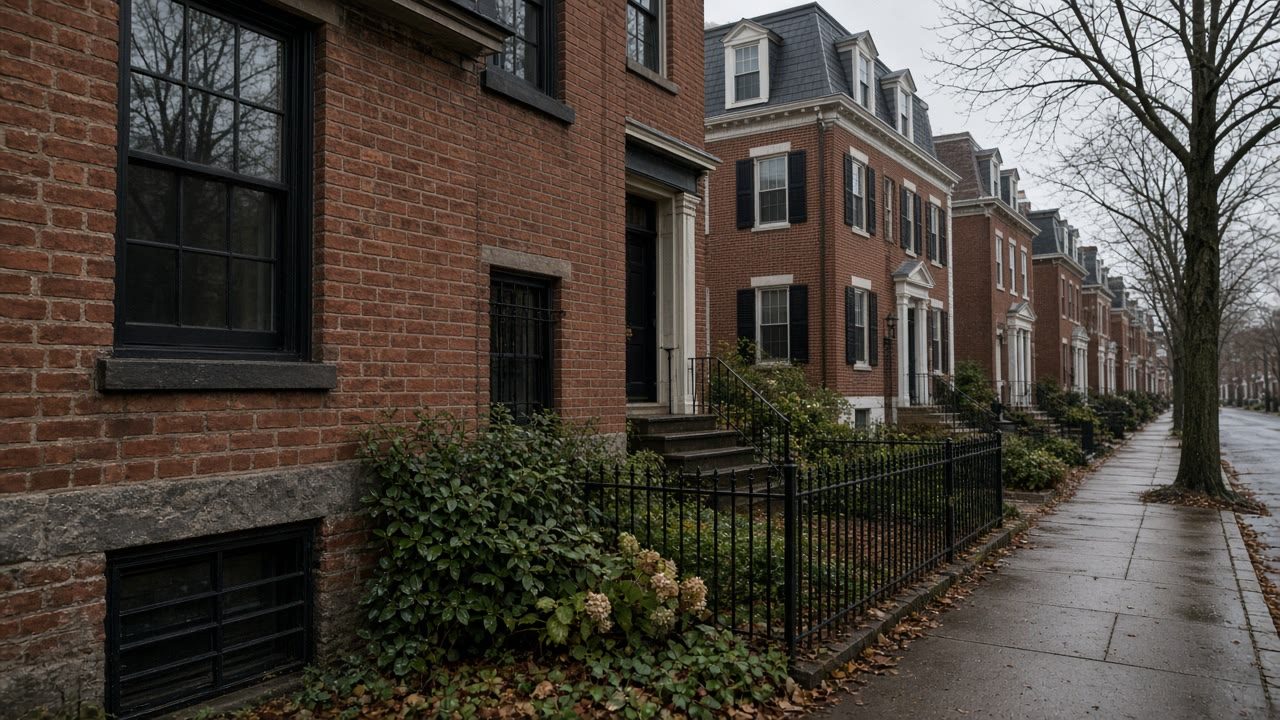
Most guidance about household mold is written for the person who owns the house, which makes it the wrong guidance for two thirds of Cambridge. Of the city's 49,444 occupied housing units, 32,897 are renter occupied and 16,547 are owner occupied, so 66.5 percent of households here rent. It is not a Cambridge peculiarity either: Chelsea runs higher still at 74.0 percent of occupied units rented, with 43.4 percent of its housing in two, three and four unit structures. So in this market the question of who is responsible is not an edge case to be handled at the end of an article. It is the first question on most jobs, and getting it right changes who pays, who organizes the work and which office has any power to move it along.
The duty is the owner's, and the code says so three times over
105 CMR 410.500(A)(1) requires every owner of a residence to keep the building and structural elements watertight and free from excess moisture or the appearance of mold. 410.500(B) requires that owner, after leaks or flooding, to ensure all surfaces have been dried within 48 hours of being notified or of the end of the event, whichever is sooner. And 410.420(A) states that no room or area in a residence may be used for habitation while it is subject to excess moisture, which is the strongest of the three, because it says a damp room does not lawfully count as living space rather than merely that somebody ought to fix it. None of these three rest on proving what species is on the wall or how anyone feels. They rest on the condition of the building, which is the thing an inspector can walk in and observe.
Cambridge is one of only three cities with a different attesting officer
This is the detail that sends people to the wrong phone number. MGL c.111 s.127L names Boston, Worcester and Cambridge as the three cities where a sanitary code violation that may endanger or materially impair a tenant's health is attested by the commissioner of housing inspection, rather than by a board of health or a local code enforcement agency the way it works everywhere else in the Commonwealth. In practice you are dealing with the Cambridge Inspectional Services Housing Division, which enforces 105 CMR 410 with four inspectors assigned to different areas of the city and asks residents, tenants and students to call 617-349-6100 and ask for the inspector for their area. Ask for your area's inspector by area, not for the department, and say what is wet rather than what you suspect it is.
What an inspection produces, and what a clean one produces
An inspection is not a conversation, it generates documents, and the documents are the leverage. 105 CMR 410.832 requires every order issued under the housing code to be in writing, to state the violations, conditions or defects, to include a copy of all inspection reports, to state a time limit for compliance and to give notice of the right to a hearing. 410.832(B)(4) also requires the order to carry the statement that this is an important legal document which may affect your rights and should be translated, rendered into any language spoken as a primary language by more than 1 percent of that community. The reverse outcome is documented too: under 410.832(C), where an inspection against all the code standards finds no violation, the board must send the owner the inspection report and a letter saying so within seven days. A landlord asking for an inspection is not only taking a risk.
The deadline on the order is what gives it teeth
The order matters less than the date written on it. 105 CMR 410.750(P) provides that any housing code violation not already listed in 410.750(A) through (O) is deemed a condition which may endanger or materially impair the health, safety and well being of an occupant once the owner fails to remedy it within the time ordered. So dampness is not automatically a health endangering condition, and it becomes one the moment an ordered deadline passes, which is a much clearer trigger than an argument about severity. Either side can contest the order: 410.820 requires a hearing to commence no later than 14 calendar days from receipt of the petition, and says that missing that window does not invalidate the order. At the far end, 410.831 lets a board issue a written finding that a dwelling or an identified part of it is unfit for human habitation, with notice and a public hearing at least five days later unless the danger is too immediate to permit delay.
Repair and deduct, and what it is capped at
Tenants have a self help route, and it is narrower than internet advice suggests. Under MGL c.111 s.127L, once a violation has been officially attested in writing under that section and the owner notified in writing, the owner has five days to begin necessary repairs or to contract in writing for them and 14 days to substantially complete them, or less if a shorter period was ordered. After that a tenant may have the work done and deduct the cost from rent, capped at four months' rent in any twelve month period. The attestation and the written notice come first: skipping them is what turns a defensible deduction into a rent arrears case. The Environmental Law Institute's survey of state mold laws describes the wider set of tenant remedies in Massachusetts as repair and deduct, treating the lease as abrogated, and rent withholding, all resting on 105 CMR 410 rather than on any mold specific statute.
If you are the landlord, the protections you assume are not there
This is where owners of small rental buildings in Cambridge, Somerville and Everett get an unpleasant surprise. MGL c.142A s.1 defines residential contracting as work on a pre-existing owner occupied building of one to four dwelling units, and a building the owner does not occupy falls outside the chapter entirely, so neither the contractor registration duty nor the Residential Contractor's Guaranty Fund reaches the job. On a rented two or three family there is no Fund to claim against if the work is done badly, which means the contract itself is doing all the work that a statutory backstop does for an owner occupier. Put the scope, the materials, the dates, the price, the payment schedule and the standard the finished job has to meet in writing, because on that building the written agreement is the whole of your protection.
A practical order of operations
Photograph it with a date, describe what is wet rather than diagnosing it, and send that to the owner or the management company in writing today, because notification is what starts the 48 hour drying deadline running. Keep a copy. Give a reasonable chance to act, then call the housing division and ask for the inspector for your area. Do not stop paying rent on the strength of an article, and do not let anybody take a wall apart in a pre-1978 building without the surveys that go first. If you are the owner, the cheapest version of this whole sequence is drying the material inside the two days and keeping the record of having done it. Either way, send us the details and the photographs and we will tell you what the work involves and what it has to prove.
Sources used in this guide
Of Cambridge's 49,444 occupied housing units, 32,897 are renter occupied and 16,547 are owner occupied, so 66.5 percent of Cambridge households rent their home.
Source: U.S. Census Bureau, American Community Survey 2020-2024 5-year estimates, accessed 2026-09-14
Chelsea has 49.6 percent of its housing units built in 1939 or earlier and a median year of construction of 1941, with 68.9 percent built before 1980. 74.0 percent of its occupied units are rented, the highest rented share in this coverage area, and 43.4 percent of units sit in two, three and four unit structures.
Source: U.S. Census Bureau, American Community Survey 2020-2024 5-year estimates, accessed 2026-09-14
The Massachusetts State Sanitary Code, 105 CMR 410.500(A)(1), requires every owner of a residence to maintain buildings and structural elements so they are protected from wind, rain and snow, and are watertight, free from excess moisture or the appearance of mold, and pest resistant.
Source: Massachusetts Department of Public Health, via Cornell Legal Information Institute, accessed 2026-09-14
105 CMR 410.500(B) states that in the event of leaks and flooding the owner shall ensure all surfaces have been dried within 48 hours from the time they are notified or the end of the event, whichever is sooner.
Source: Massachusetts Department of Public Health, via Cornell Legal Information Institute, accessed 2026-09-14
105 CMR 410.420(A), the habitability requirements of the Massachusetts State Sanitary Code, states that no room or area in a residence may be used for habitation if it is subject to excess moisture.
Source: Massachusetts Department of Public Health, via Cornell Legal Information Institute, accessed 2026-09-14
MGL Chapter 111 Section 127L names Boston, Worcester and Cambridge as the three cities where a sanitary code violation that may endanger or materially impair a tenant's health is attested by the commissioner of housing inspection rather than by the board of health or a local code enforcement agency.
Source: Massachusetts General Court, accessed 2026-09-14
Cambridge Inspectional Services runs a Housing Division that enforces the State Sanitary Code, 105 CMR 410, with four inspectors assigned to different areas of the city, and directs residents, tenants and students to call 617-349-6100 and ask for the housing inspector for their area to request an inspection.
Source: City of Cambridge Inspectional Services Department, accessed 2026-09-14
105 CMR 410.832 requires that every order issued under the housing code be in writing, state the violations, conditions or defects, include a copy of all inspection reports, state a time limit for compliance, and give notice of the right to a hearing.
Source: Massachusetts Department of Public Health, via Cornell Legal Information Institute, accessed 2026-09-14
105 CMR 410.832(B)(4) requires a housing code order to carry the statement This is an important legal document. It may affect your rights. You should have it translated, rendered into any non-English language spoken as a primary language by more than 1 percent of that community's population.
Source: Massachusetts Department of Public Health, via Cornell Legal Information Institute, accessed 2026-09-14
105 CMR 410.832(C) requires that where an inspection against all the housing code standards reveals no violation, the board of health shall forward a copy of the inspection report and a letter saying so to the owner within seven days of completing the inspection.
Source: Massachusetts Department of Public Health, via Cornell Legal Information Institute, accessed 2026-09-14
105 CMR 410.750(P) provides that any violation of the housing code not already listed in 410.750(A) through (O) shall be deemed a condition which may endanger or materially impair the health or safety and well-being of an occupant once the owner fails to remedy it within the time ordered by the board of health.
Source: Massachusetts Department of Public Health, via Cornell Legal Information Institute, accessed 2026-09-14
105 CMR 410.820 requires a housing code hearing to commence no later than 14 calendar days from the date the petition for a hearing is received, and states that missing that window does not invalidate the order.
Source: Massachusetts Department of Public Health, via Cornell Legal Information Institute, accessed 2026-09-14
105 CMR 410.831 lets a board of health issue a written finding that a dwelling or a specifically identified portion of it is unfit for human habitation, and where the unit is occupied it must first give written notice with a copy of the inspection report and hold a public hearing at least five days later, unless it determines in writing that the danger is too immediate to permit delay.
Source: Massachusetts Department of Public Health, via Cornell Legal Information Institute, accessed 2026-09-14
Under MGL Chapter 111 Section 127L, once a violation has been officially attested in writing under that section and the owner has been notified in writing, the owner has five days to begin necessary repairs or contract in writing for them and 14 days to substantially complete them, or a shorter period if one was ordered. After that a tenant may have the work done and deduct the cost from rent, capped at four months' rent in any 12-month period.
Source: Massachusetts General Court, accessed 2026-09-14
The Environmental Law Institute's survey of state laws addressing mold in rental dwellings describes the whole of Massachusetts law on mold as the State Sanitary Code, 105 CMR 410.000, amended in 2023, enforced by local agencies that must inspect a dwelling on request and order correction within the code's time periods, backed by tenant remedies including repair and deduct, treating the lease as abrogated, and rent withholding. It records no Massachusetts mold contractor licensing program and no state numerical mold standard.
Source: Environmental Law Institute, Database of State Indoor Air Quality Laws, accessed 2026-09-14
MGL Chapter 142A Section 1 defines residential contracting as the reconstruction, alteration, renovation, repair, modernization, conversion, improvement, removal or demolition of, or construction of an addition to, a pre-existing OWNER OCCUPIED building containing at least one but not more than four dwelling units, and defines Owner as a homeowner of such a building or a tenant of it. A building the owner does not occupy falls outside the chapter entirely, so neither the registration duty nor the Residential Contractor's Guaranty Fund reaches it.
Source: Massachusetts General Court, accessed 2026-09-14
Services this guide relates to
Need someone to look at it?
Send the details and we will come back to you.