
Cambridge and the surrounding Greater Boston area
Mold Inspection and Testing in Cambridge, MA
Find out whether you have a real mold problem, how far it reaches and what water is feeding it, before anyone quotes you to take a wall apart.
Mold Testing quote
Tell us what you can see, what it smells like and whether anything is still wet. That is usually enough for us to say whether an inspection is the step you are on, or whether this is small enough to handle yourself.
Would you rather talk it through? Call (315) 640-3590, answered 24/7.
$100 off your first job
Credited by us on your first booked job.
- One credit per customer per property, on your first booked job.
- Valid through December 31, 2026.
Mention this offer when you book. Full terms.
What an inspection puts in your hands
An inspection answers the question you actually have: is this a building fault, how far does it go, and what will putting it right involve. An inspector reads the moisture behind and beneath what you can see with meters and thermal imaging, measures the affected area, photographs it, and hands you a written scope that says what has to come out and what can stay. It also tells you where you stand, which in Massachusetts is sharper than most people expect: under 105 CMR 410.420(A), no room or area in a residence may be used for habitation while it is subject to excess moisture. A wet room is not a decorating problem, it is a room that does not lawfully count as living space until the moisture is dealt with. And because the state issues no mold assessor or mold remediation license, nobody has checked the company standing in your basement, so the readings, the measurements and the written scope are the part anyone can check, and they are what a housing inspector, an insurer or a buyer asks to see.
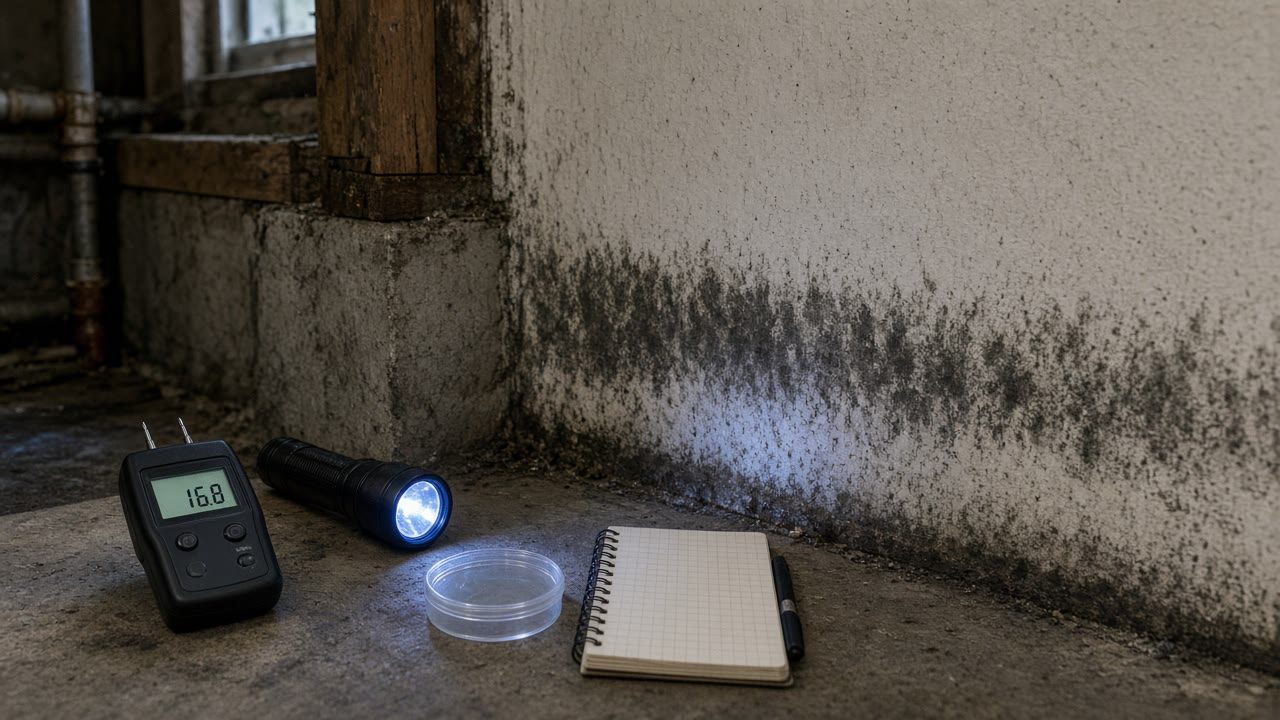
- A walkthrough of the affected rooms, the basement and the crawl space, with the growth, the staining and the odors recorded
- Moisture mapping with meters and thermal imaging, to find the wet material behind plaster and under layered flooring
- Measuring the affected area against the EPA's ten square foot line, which is what decides whether this is a homeowner job
- Checking windows and exterior elements against the code's weathertight standard, which is a measurable 1/8 inch gap on a double hung sash rather than a matter of opinion
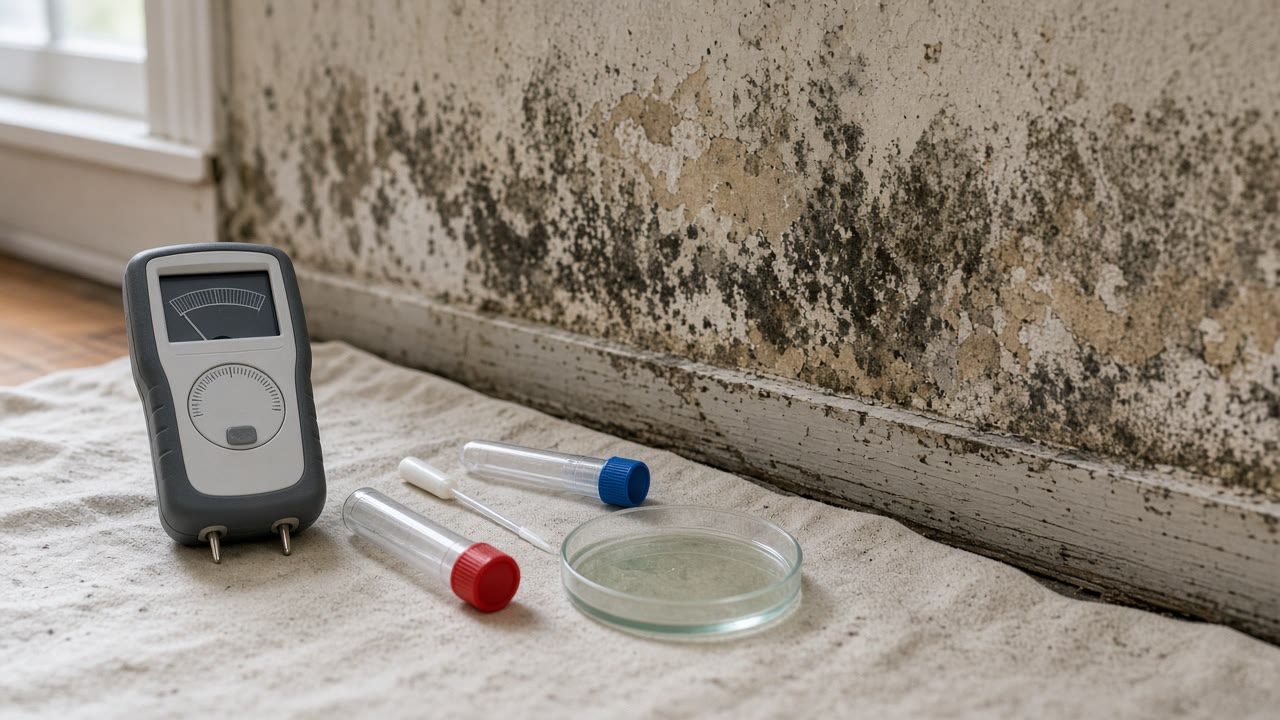
- Air or surface sampling where it will change the decision, rather than as a matter of routine
- A written scope of work naming the areas, the methods, the containment and how the finished job will be checked
- Documentation put together for a housing inspector's order, an insurance claim or a sale
- A return visit after removal: readings, a look at what was opened up, and a written record that the work matched the scope
What decides how far an inspection has to go
Two houses with the same stain can need very different inspections. What moves it is the building, and how much of it has to be opened up or read with meters before the question can be answered.
How old the building is
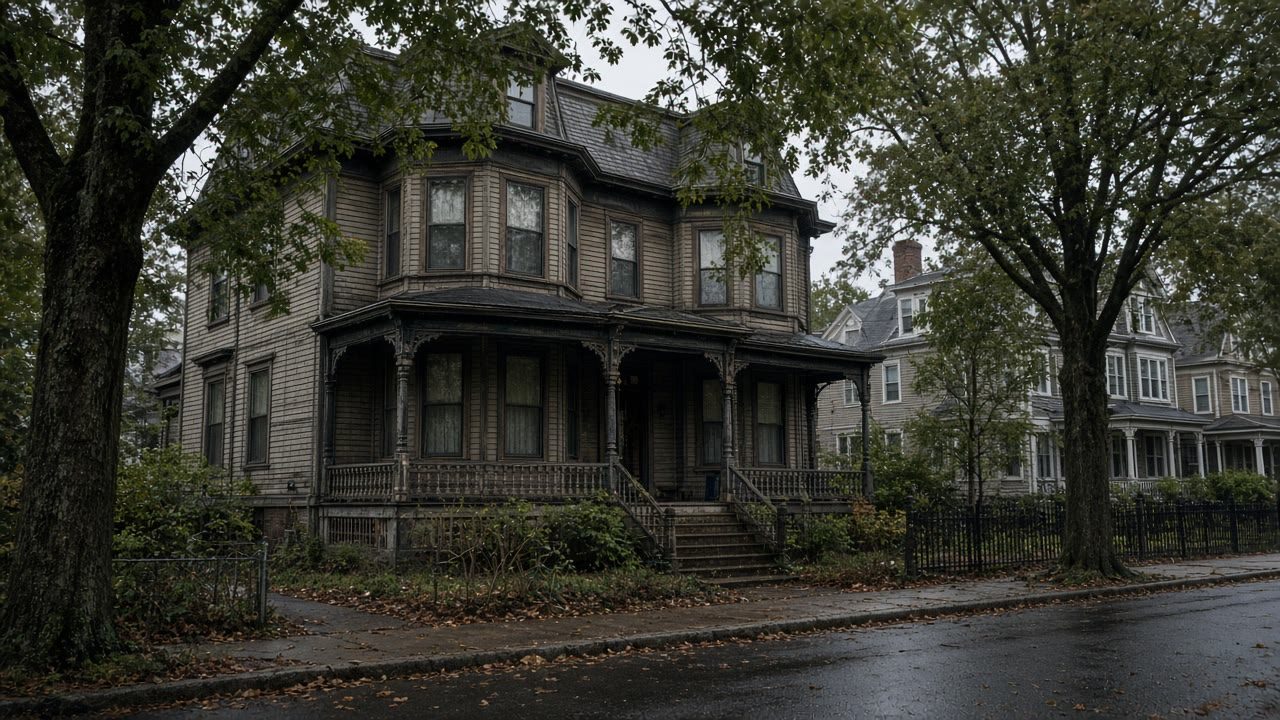
Cambridge has 47 percent of its housing units built in 1939 or earlier and a median construction year of 1950. Plaster on wood lath, rubble foundations and unconditioned basements hold water out of sight, so more of the building has to be read with meters before anyone can say how far it goes.
Whether anything is still wet
A live leak and a finished one are different investigations. If water is still arriving, the 48 hour drying deadline in 105 CMR 410.500(B) is already running, and drying comes before any testing does.
Whether the growth can be seen at all
Visible growth can be measured and scoped in an afternoon. A musty smell with nothing to look at is the harder job, and it is the one where meters, thermal imaging and occasionally a sample earn their money.
Whether someone other than you has to read the result
An order from a housing inspector arrives in writing, with the inspection reports attached and a time limit for compliance on it. If a landlord, a tenant, an insurer or a buyer is going to read the outcome, say so at the start, because it changes what gets measured and photographed.
Whether the unit is rented
MGL c.111 s.127L names Cambridge as one of only three cities where a sanitary code violation that may endanger a tenant's health is attested by the commissioner of housing inspection rather than by a board of health, and Cambridge Inspectional Services runs that housing division with an inspector for each area of the city. In a rented unit there can be a third party reading the same wall you are, on a deadline, so the inspection has to stand up to it.
The month, if the problem is a cool basement
The average daily dew point at Logan sits at 60F or higher every day from July 7 through August 23. A basement wall cooler than that condenses water straight out of ordinary summer air, so the honest finding is sometimes that there is no leak to find.
Where the envelope is leaking air, not just water
105 CMR 410.530 treats a window as weathertight only when the panes are sealed, the sash works without excessive effort, and the gap between sash and frame is no wider than 1/8 inch on a double hung or 1/16 inch on a casement, or a storm window is fitted. In a pre-1940 house that gap is often where the staining on the reveals comes from, and it is something you can hold a ruler against instead of arguing about.
How much of the building has to be reached
A single closet wall is one visit. A three family where the smell shows up on two floors, or an attic and a crawl space that both have to be entered, is a different piece of work and a longer document at the end of it.
Not sure a test is worth paying for?
Describe what you are looking at. Where the growth is visible, a sample often changes nothing, and we would rather say so.
How an inspection runs, first visit to written scope
Walk the building and record what is visible
The growth, the staining, the smell and the materials affected, room by room, photographed as they are found. This is the part you could do yourself, and doing it before the visit makes the visit shorter.
Trace the water, not the stain
Meters and thermal imaging map the wet material behind and beneath the mark on the wall. In a house with plaster on wood lath the wet area is routinely larger than the stained area, and this is the step that changes the scope.
Measure the area
Measured, not estimated. The EPA puts the line at about ten square feet, roughly a three foot by three foot patch, and under it most homeowners can handle the cleanup themselves.
Sample only where it changes the answer
The EPA states that where visible growth is present, sampling is usually unnecessary, and a Massachusetts municipal health department is blunter still: there are no state or federal standards for airborne mold, so a result cannot be compared to a safe level. A sample is worth paying for when you can smell it and cannot find it, or when a claim or a sale needs the condition on record.
Put it in writing
Areas, quantities, method per area, containment, who has to be told, and how the finished work will be checked. Above one thousand dollars, Massachusetts requires the agreement itself to be in writing with ten specified items in it, including a detailed description of the work and materials, the start and substantial completion dates, the total price and the payment schedule. The scope is what that price is built on.
Check the finished work against the scope
After removal, readings are taken again and what was opened up is looked at. The code defines compliance as not only correcting the violation but restoring the dwelling to the condition it was in beforehand, with any permitted work signed off, so the record has to cover the putting back as well as the taking out.
What mold testing looks like
Where a mold inspection starts and stops
When you may not need this at all
- If the patch is smaller than about ten square feet and you can see all of it, the EPA's guidance is that most homeowners can clean it up themselves. Massachusetts requires no license to do that, so nobody is standing between you and a bucket.
- If you can already see the mold, a test usually changes nothing. The EPA says sampling is unnecessary where growth is visible, and there is no airborne standard in Massachusetts to compare a number against.
- If a pipe let go yesterday and nothing has started growing, this is a drying job on a clock rather than an inspection.
- If a cool basement only smells musty in July and August, try a hygrometer and a dehumidifier before you pay anyone. Summer dew points here will wet a cold wall with no leak involved.
What is out of scope
- Repairing the leak, the roof, the gutters, the grading or the plumbing that let the water in. That is a separate trade, and it is the one that decides whether the mold comes back.
- Asbestos and lead inspection, which are licensed separately in Massachusetts and are arranged in their own right before any demolition.
- Any opinion about health, symptoms or diagnosis.
- Deciding what an insurance policy covers, or negotiating with an adjuster.
- Air sampling sold as a matter of routine, or a number presented as a pass or a fail when there is no standard to pass.
Towns where we arrange inspections
Questions people ask before paying for a test
Do I need a mold test if I can already see it?
Usually not. The EPA states that where visible mold growth is present, sampling is unnecessary, and a Massachusetts health department puts it plainly: no state or federal entity sets a limit for airborne mold, so a result cannot be compared to a safe level. Testing earns its place when you can smell mold and cannot find it, or when a claim, a sale or a housing inspector's order needs the condition documented.
Does Massachusetts license mold inspectors?
No. The state licenses asbestos contractors, deleading contractors, plumbers, gas fitters and electricians, and has no mold assessor or mold remediation license at all, so no state agency vets a mold company before it works in your home. Anyone telling you the state approved them for mold work is telling you something that does not exist. What you can check is the paperwork: the readings, the photographs, the measured area and the written scope.
What do I actually get at the end of it?
A written scope naming the areas and quantities, the method for each area, the containment required, and how the finished work will be checked, with the moisture readings and photographs behind it. That document is what a removal contractor prices, and it is what you hold them to afterwards.
My landlord says it is condensation, not mold. Who decides?
Not the two of you, in the end. 105 CMR 410.500(A)(1) requires a dwelling to be watertight and free from excess moisture or the appearance of mold, 105 CMR 410.020 defines chronic dampness as the regular or periodic appearance of moisture, water, mold or fungi, and 105 CMR 410.420(A) goes further: no room may be used for habitation while it is subject to excess moisture. Cambridge is also one of three cities named in MGL c.111 s.127L where that kind of violation is attested by the commissioner of housing inspection, reached through Cambridge Inspectional Services, which runs a housing inspector for each area of the city. A written inspection with dated readings and photographs is what turns a disagreement into a record.
Can the same company inspect it and then remove it?
In Massachusetts, yes. Nothing in state law separates the two, which is exactly why the scope has to be written down and measured before any price is attached to it. If the company that says how much work is needed is also selling the work, the document is your only check on it, so read it and keep it.
Tell us what you can see
A few sentences about the room, the smell and the water is enough to say what this needs next.